

France
THE PAREA VIEW
Gluten Free Travel in the France
France is one of the more nuanced destinations for celiac travelers — not because the food is inherently dangerous, but because the culture around dietary requests has historically been resistant in a way that requires a specific approach. French cuisine is built on sauces, stocks, and technique, and many classic preparations contain gluten in ways that are not visible on a menu. At the same time, France has seen meaningful change over the past decade: GF awareness has grown in Paris and in major tourist regions, dedicated GF bakeries and restaurants are genuinely excellent, and EU allergen law applies here as everywhere else in Europe.
The practical reality is that France rewards travelers who come prepared and communicate clearly. "Sans gluten" is widely understood; "maladie coeliaque" carries the medical weight that often matters in a traditional kitchen. Smaller bistros and brasseries may push back on modifications — not out of indifference, but because the kitchen is built around fixed preparations. Knowing where to go in advance, rather than making decisions at the door, makes an enormous difference. Paris, Lyon, and Bordeaux all have well-developed GF dining options; in rural areas and more traditional regions, preparation is essential.
KEY CONSIDERATIONS
Classic French sauces (béchamel, velouté, many pan sauces) are frequently thickened with wheat flour. Always confirm sauce preparation — even dishes that appear naturally GF may have been finished with a thickened sauce.
Dedicated GF bakeries in Paris are genuinely excellent — some of the best in Europe. Finding good GF bread and pastry is entirely possible; it simply requires knowing where to go.
Crêpes are traditionally made with wheat flour. Galettes (Breton buckwheat crêpes) are naturally gluten-free, but cross-contamination on shared griddles is common — seek out dedicated GF or buckwheat-only crêperies.
Most French wines, Champagne, and spirits (including Cognac and Armagnac) are naturally gluten-free. Beer is not. Cidre (Breton cider) is an excellent gluten-free alternative.
Charcuterie, fresh cheeses, and most antipasti-style starters are generally safe — always confirm pâtés and prepared terrines, which occasionally use flour as a binder.
French servers in smaller establishments may not always have detailed allergen knowledge. Asking to speak with the chef (le chef de cuisine) often produces a more reliable response than asking front-of-house staff.
A French-language celiac dining card is strongly recommended, particularly outside Paris and in traditional regional restaurants.
TAKE THE RESEARCH WITH YOU
Products for this destination
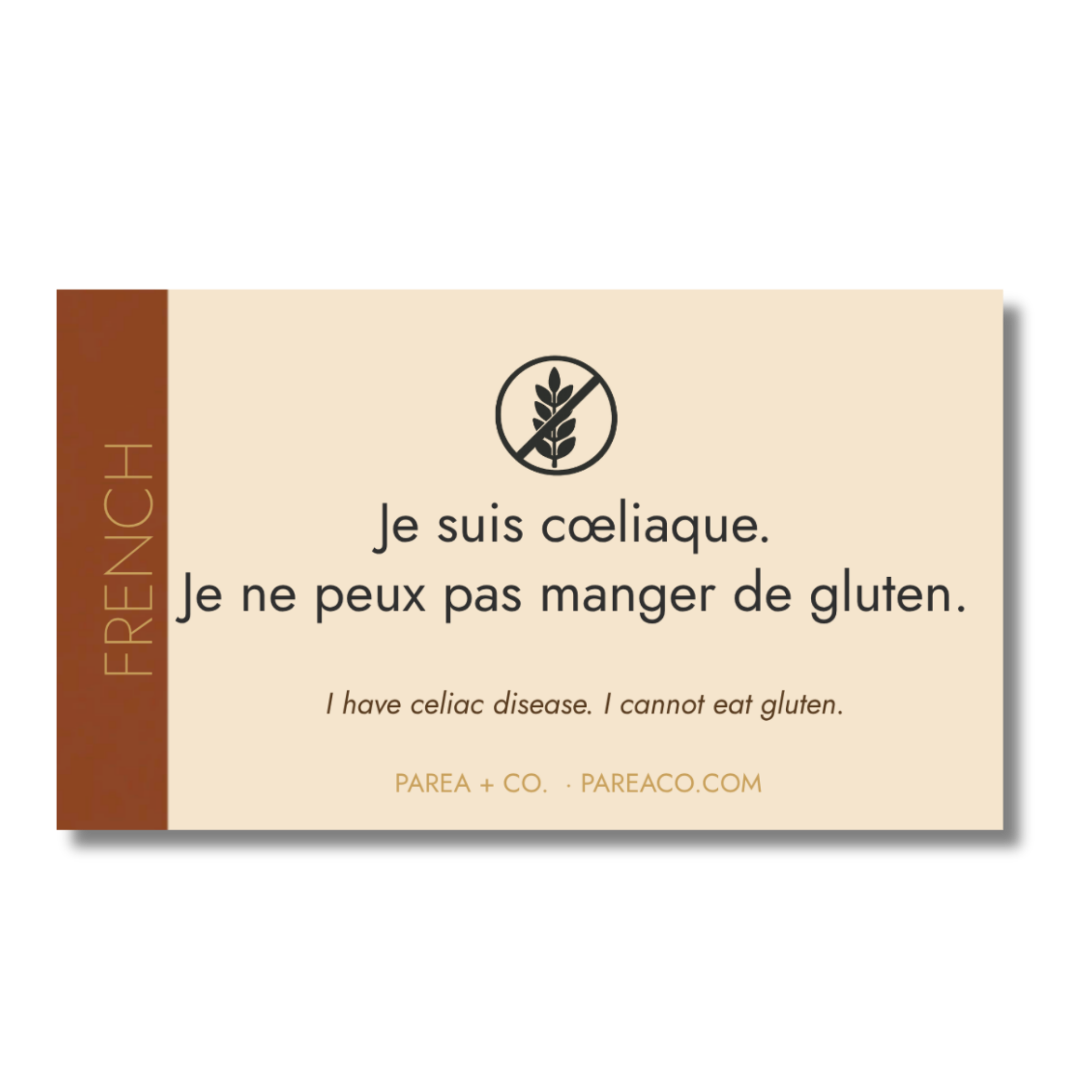
Traveling in France with celiac disease? This pocket-sized café card is designed for quick, confident communication — flash it to a café owner, street stand, or server without a word of French required.
Each order includes 2 lightly laminated cards — durable enough for daily travel use. The front states your diagnosis clearly in French, and the back outlines your key meal requirements so kitchen staff know exactly what you need.
Slim, elegant, and built to live in your wallet.
PHYSICAL CARD
Cafe Card
Pre-order now. Ships September 30.
For the moments when a quick exchange isn't enough — when you're ordering a full meal, navigating a traditional French kitchen, or trying to understand exactly what's in a dish.
This laminated tri-fold card is designed for the full dining conversation in France. It opens with a clear medical declaration — J'ai la maladie cœliaque. Je ne peux pas manger de gluten. — and carries that framing through every question and requirement that follows. Kitchen staff understand this is not a preference before they read another word.
French cuisine is built on technique, and many of those techniques involve flour — roux-thickened sauces, breaded preparations, pastry that appears in unexpected places. This card gives you the language to ask the right questions before the plate arrives.
Compact enough for a wallet. Laminated for durability. Folds flat and travels well.
Single card. Tri-fold, laminated. Wallet size.
Includes:
Dining questions covering cross-contamination, fryer use, sauce ingredients, and kitchen communication — in French and English
Meal requirement statements your server can bring directly to the kitchen
Ingredients to avoid, listed in French with English translations
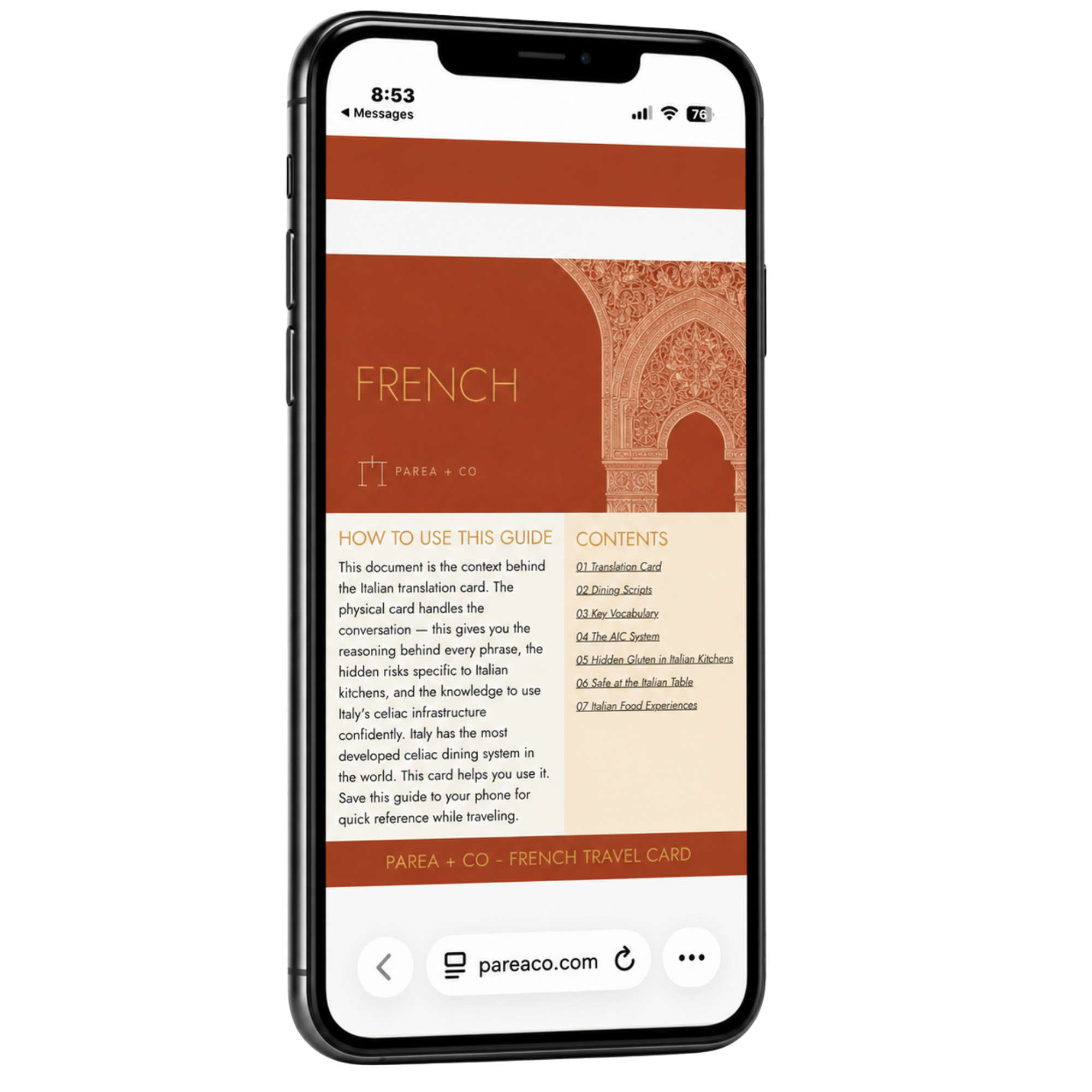
Pairs well with A Celiac Guide to the French Table — a digital companion that gives you the reasoning behind every phrase, the hidden risks specific to French kitchens, and the vocabulary to handle situations the card alone cannot cover. Read it before you go. Reference it on your phone when you need it.
Also pairs well with the French Celiac Café Card — keep the translation card in your wallet for sit-down meals, and hand off a café card at quick stops. Available together in the France Celiac Card Set, or with the digital guide in the France Celiac Travel Set.
DIGITAL
Guide to the Table
PHYSICAL CARD
Dining Card
PHYSICAL CARDS
Card Set
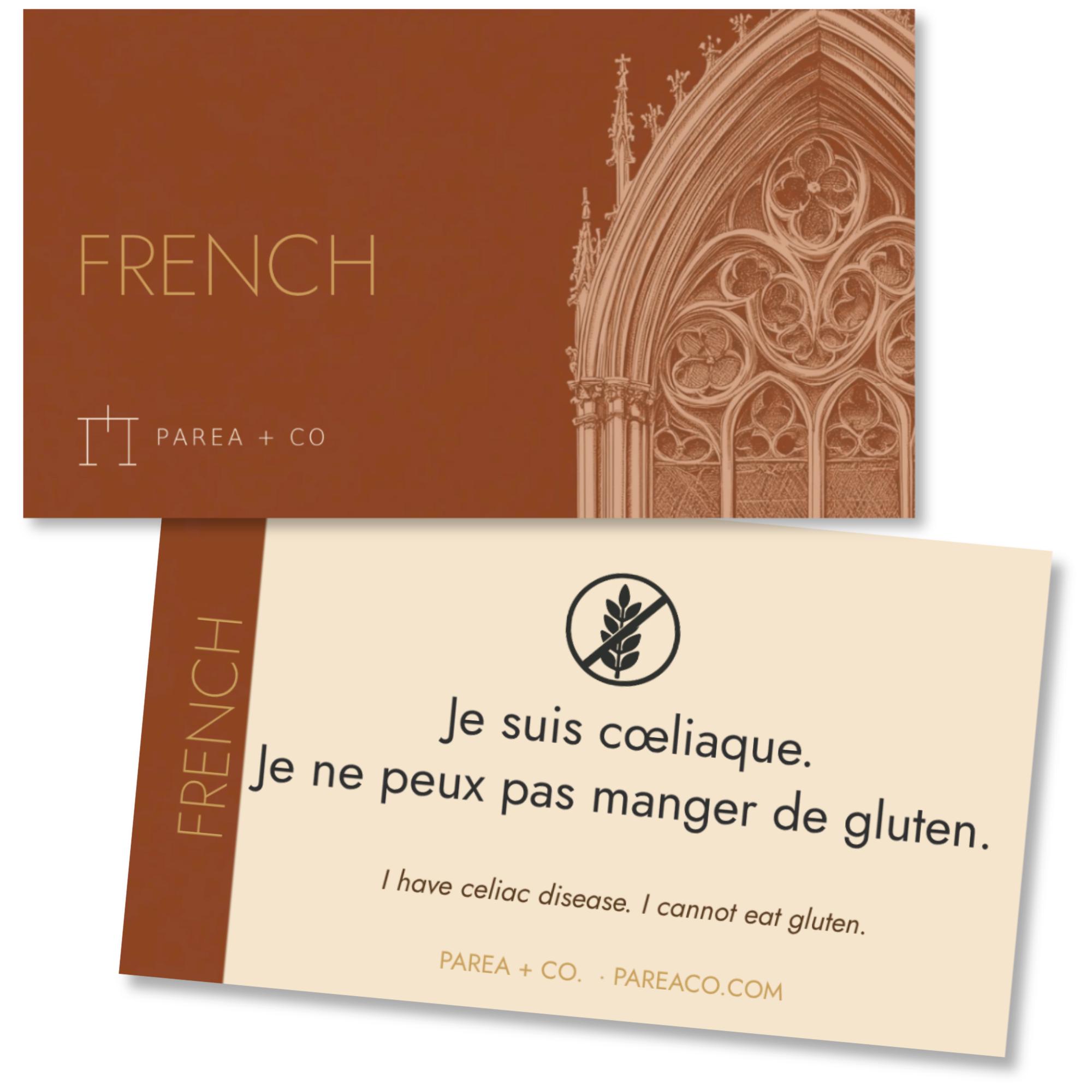
.Pre-order now. Ships September 30.
Two cards, one destination. The Dining Script Card handles the full sit-down meal — the questions, the requirements, the medical declaration that travels from your table to the kitchen. The Café Card handles the quick stop — a single panel, handed across a counter, that communicates everything a busy server needs to know.
Together they cover every dining situation France puts in front of you.
Includes the French Celiac Translation Card and the French Celiac Café Card. Laminated. Wallet size.
PHYSICAL + DIGITAL
Travel Set
Want someone to handle the details?
We know France well — the cities, the market towns, the restaurants worth seeking out. Tell us where you want to go.