
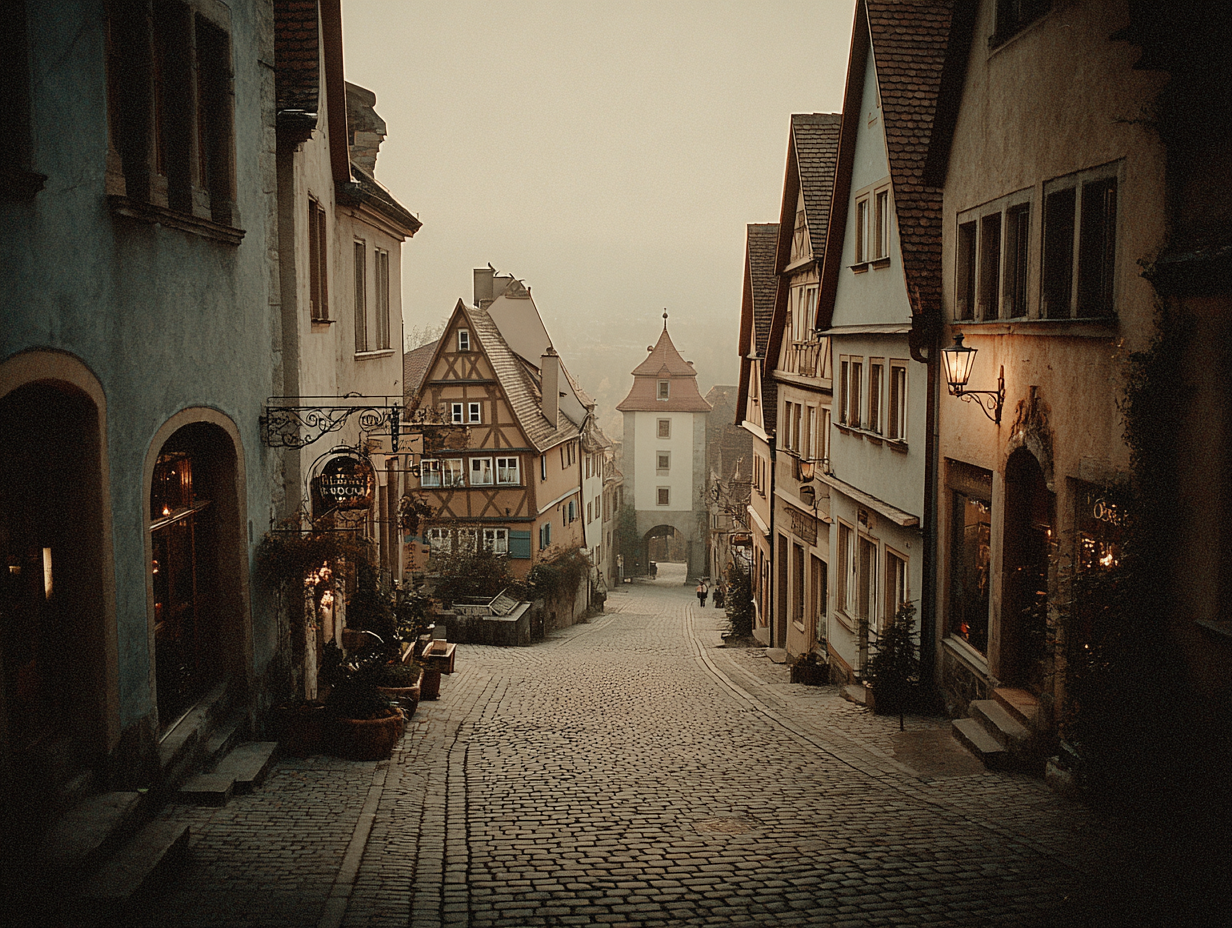
Germany
THE PAREA VIEW
Gluten Free Travel in the Germany
Germany presents a particular kind of challenge: a food culture built, more than almost any other in Europe, around bread, beer, and wheat-based dishes — yet one with strong consumer protection standards and a well-organized gluten-free product market. The contradiction is real, and it shapes the experience of celiac travel here more than in most destinations. German supermarkets carry an excellent range of labeled GF products, and urban restaurant scenes in Berlin, Munich, Hamburg, and Cologne have developed genuine GF awareness. The difficulty is that traditional German cuisine, from pretzels to schnitzel to most sausages, contains gluten in ways that are not always obvious.
The upside is German directness and regulatory rigor. EU allergen labeling laws are taken seriously, menus in larger restaurants frequently declare allergens, and staff are generally accustomed to the question. Berlin in particular has a large, well-developed GF restaurant scene. The challenge comes in traditional Bavarian gasthaus settings, festival environments like Christmas markets and Oktoberfest, and smaller towns where wheat is simply the default assumption in almost everything on the menu.
KEY CONSIDERATIONS
EU allergen labeling laws are strictly enforced. Packaged foods are reliably labeled, and restaurant menus in urban areas often carry full allergen declarations — look for the Allergene information, typically available on request.
Most traditional German sausages (Bratwurst, Weißwurst) contain fillers and binders that may include wheat. Always confirm with staff — "glutenfrei" is widely understood in restaurant contexts.
Schnitzel, pretzels, Käsespätzle, and most bread-based dishes are NOT gluten-free. These are central to traditional German dining and appear everywhere.
German beer is not gluten-free. Gluten-free beer options are available in specialty shops and increasingly in urban restaurants. Wine, most spirits, and Apfelwein (apple wine) are generally safe.
Berlin has a particularly well-developed dedicated GF restaurant and bakery scene — one of the strongest in continental Europe for celiac travelers. Munich and Hamburg follow.
Christmas markets and festival food stalls present high cross-contamination risk. Roasted chestnuts and some grilled meats may be safe — fried and breaded items are not.
A German-language celiac dining card is recommended, particularly outside major cities and in traditional Bavarian or regional restaurant settings.
TAKE THE RESEARCH WITH YOU
Products for this destination
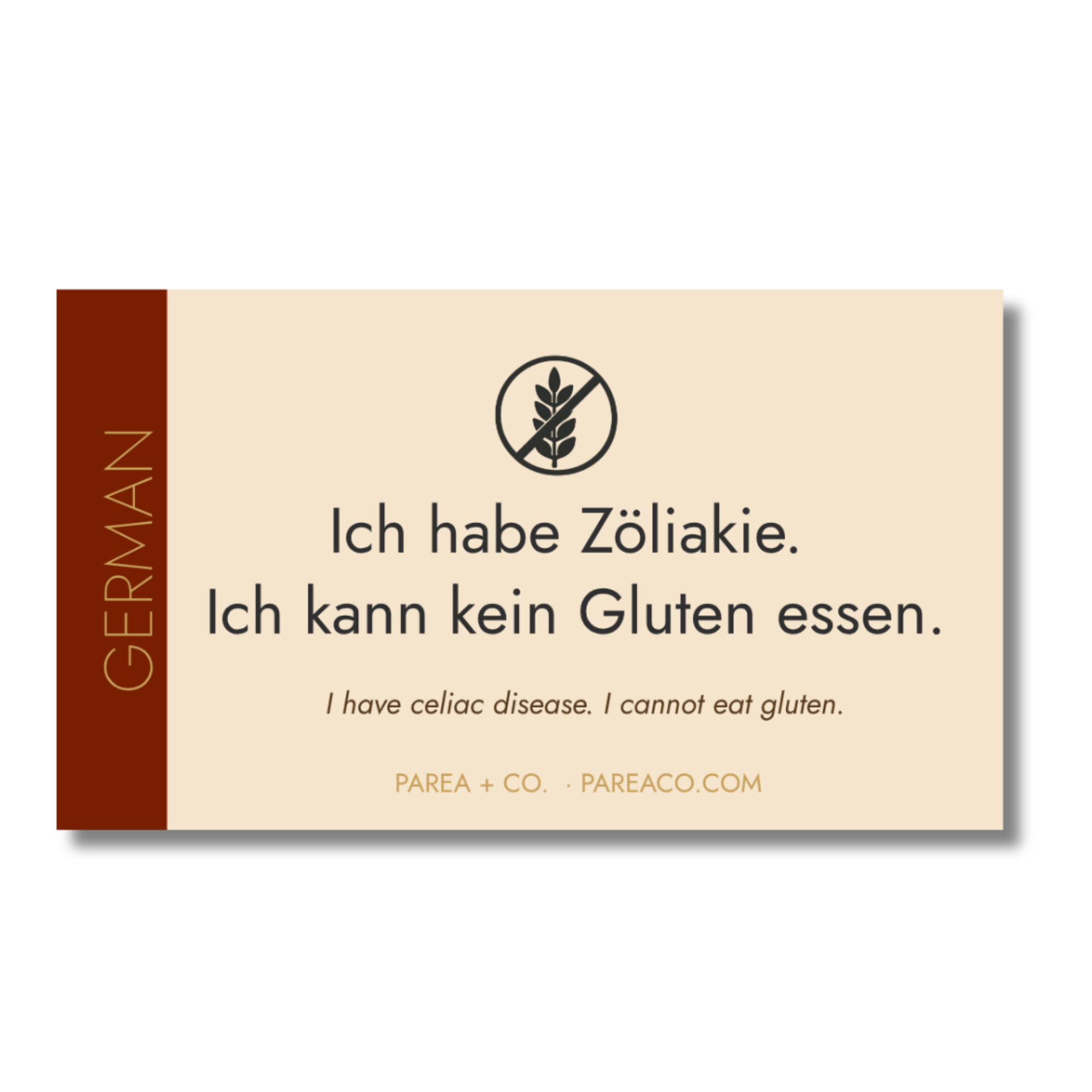
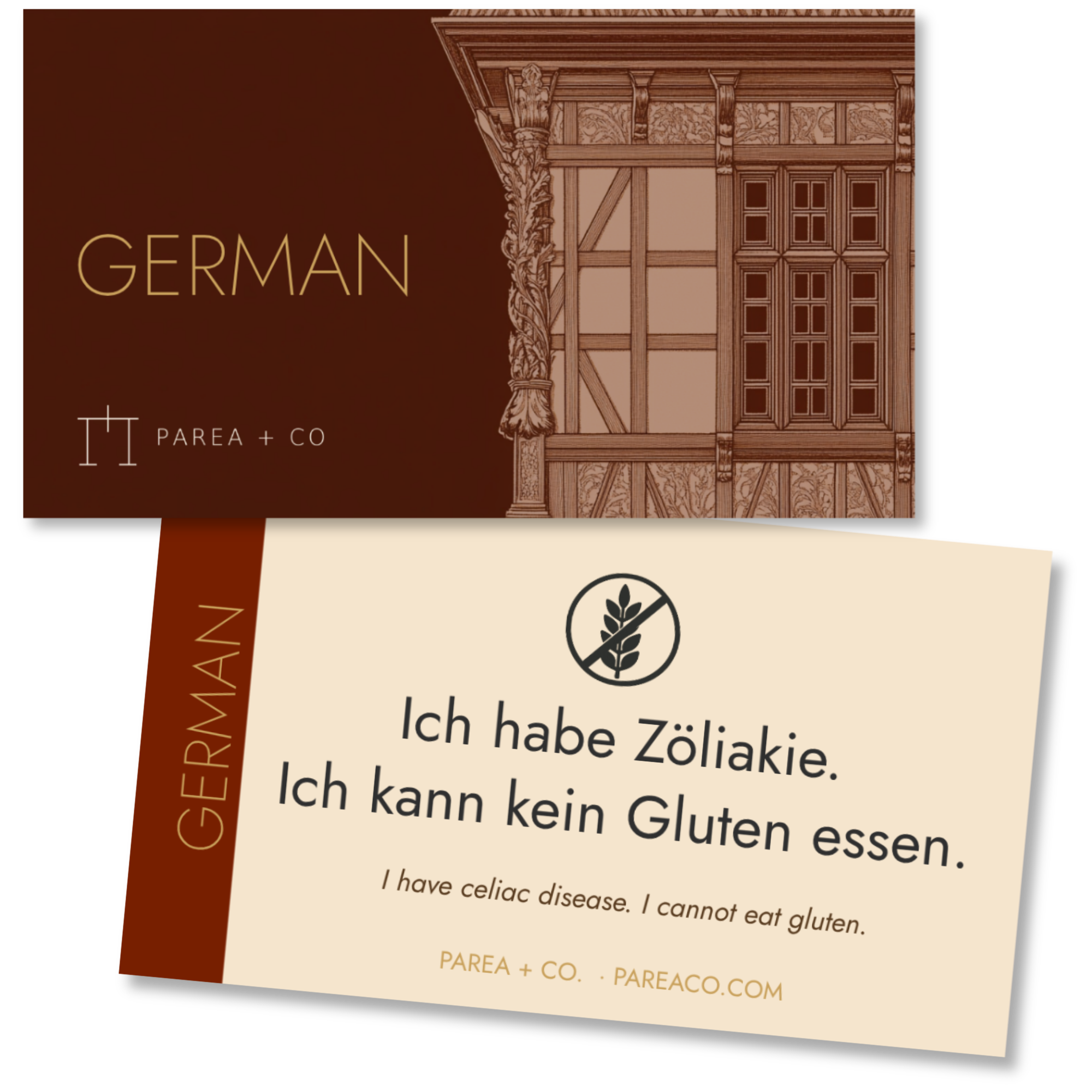
Traveling in Germany with celiac disease? This pocket-sized café card is designed for quick, confident communication — flash it to a café owner, street stand, or server without a word of German required.
Each order includes 2 lightly laminated cards — durable enough for daily travel use. The front states your diagnosis clearly in German, and the back outlines your key meal requirements so kitchen staff know exactly what you need.
Slim, elegant, and built to live in your wallet.
PHYSICAL CARD
Cafe Card
Pre-order now. Ships September 30.
For the moments when a quick exchange isn't enough — when you're ordering a full meal, navigating a traditional German kitchen, or trying to understand exactly what's in a dish.
This laminated tri-fold card is designed for the full dining conversation in Germany. It opens with a clear medical declaration — Ich habe Zöliakie. Ich kann kein Gluten essen. — and carries that framing through every question and requirement that follows. Kitchen staff understand this is not a preference before they read another word.
German cuisine is wheat-forward by nature — bread, pretzels, beer-based sauces, and breaded preparations appear across every region and meal type. This card gives you the language to ask the right questions before the plate arrives.
Compact enough for a wallet. Laminated for durability. Folds flat and travels well.
Single card. Tri-fold, laminated. Wallet size.
Includes:
Dining questions covering cross-contamination, fryer use, sauce ingredients, and kitchen communication — in German and English
Meal requirement statements your server can bring directly to the kitchen
Ingredients to avoid, listed in German with English translations
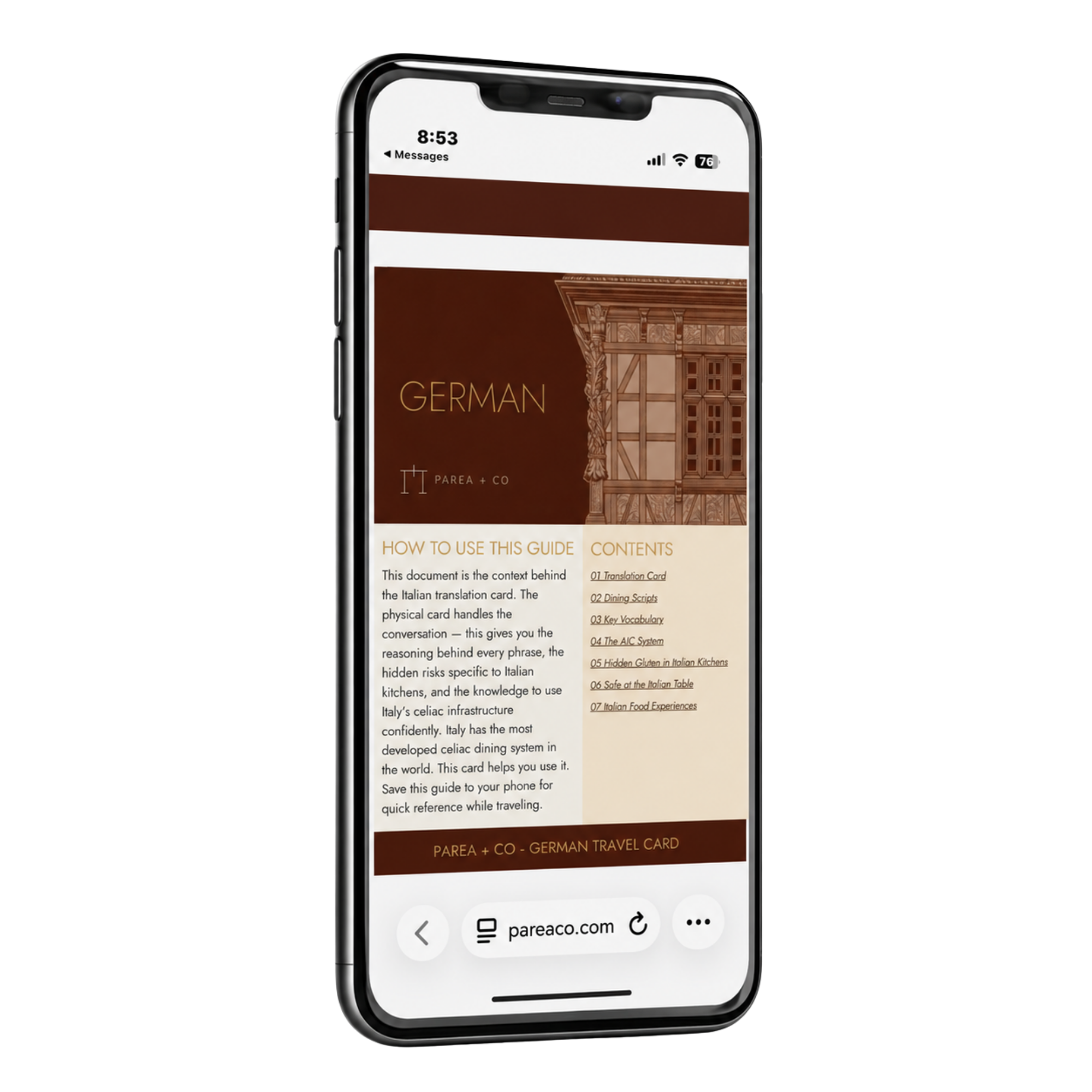
Pairs well with A Celiac Guide to the German Table — a digital companion that gives you the reasoning behind every phrase, the hidden risks specific to German kitchens, and the vocabulary to handle situations the card alone cannot cover. Read it before you go. Reference it on your phone when you need it.
Also pairs well with the German Celiac Café Card — keep the translation card in your wallet for sit-down meals, and hand off a café card at quick stops. Available together in the Germany Celiac Card Set, or with the digital guide in the Germany Celiac Travel Set.
DIGITAL
Guide to the Table
PHYSICAL CARD
Dining Card
PHYSICAL CARDS
Card Set
.Pre-order now. Ships September 30.
Two cards, one destination. The Dining Script Card handles the full sit-down meal — the questions, the requirements, the medical declaration that travels from your table to the kitchen. The Café Card handles the quick stop — a single panel, handed across a counter, that communicates everything a busy server needs to know.
Together they cover every dining situation Germany puts in front of you.
Includes the German Celiac Translation Card and the German Celiac Café Card. Laminated. Wallet size.
PHYSICAL + DIGITAL
Travel Set
Want someone to handle the details?
We know Germany well — the cities, the markets, the kitchens worth trusting. Tell us where you want to go.