
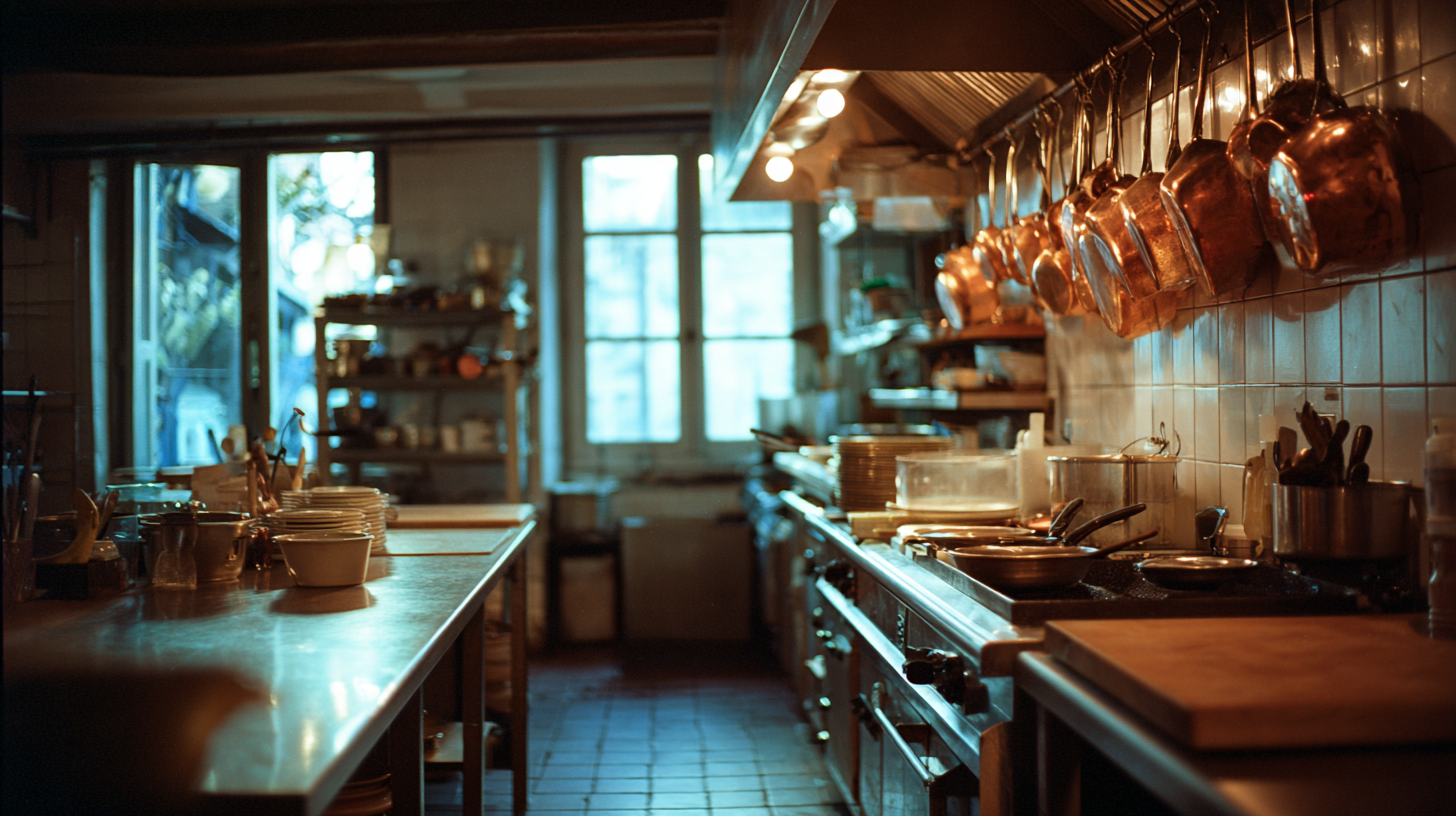
Reading a Kitchen
Dedicated, aware, or traditional — and how to work out which one you're in.
Two restaurants can put the same gluten-free dish on the same menu at the same price and be entirely different propositions. What separates them isn’t the recipe, and it isn’t good intentions. It’s what happens behind the swinging door — whether safety is built into how the kitchen works, or improvised each time someone asks.
Most kitchens fall into one of three kinds. Learning to tell them apart in the first two minutes is the most useful skill a celiac traveler can develop.
The Dedicated Kitchen
No gluten in the building. Or a genuinely separate gluten-free kitchen with its own equipment, its own space, and its own staff.
Everything on the menu is available to you. There is no ordering strategy, no question to ask, no dish to avoid. You eat like everyone else, which is a stranger and better feeling than it sounds.
How to recognize itIt will say so, loudly and everywhere — on the door, on the menu, on the website. Dedicated kitchens are expensive to run and they don’t hide it. If you have to ask whether a kitchen is dedicated, it almost certainly isn’t.
What it can’t doBe everywhere. They’re rare, they book out, and outside a handful of cities you may not find one at all. Building a trip around them means building a trip around a very short list.
The Aware Kitchen
A shared kitchen that has actually thought about the problem.
Gluten is cooked here, and there is a system for keeping it away from your food: a dedicated fryer, a separate pot for gluten-free pasta, a clean prep surface, separate utensils, an order of operations. Somebody trained the staff. The order gets flagged on the ticket. More than one person in the kitchen knows about it.
This is where most of the good eating happens. A great many of Europe’s best restaurants are here, and a celiac who can identify an Aware kitchen has access to almost all of them.
How to recognize itThe answers are specific and they come without hesitation, because the staff have given them before. We boil it in a separate pot. We don’t fry it — the fryer’s shared. The chef will plate it away from the pass. Detail is the tell. A kitchen with a system can describe the system.
What it can’t doGuarantee. The protocol is only as good as the night. A new chef, a bad rush, a language gap — any of them can break it. This is why the questions still get asked even in a kitchen you trust.
The Traditional Kitchen
A kitchen with gluten-free items on the menu and nothing behind them.
The dishes are real. The risotto has no gluten in it, the grilled fish has no gluten in it, and both are cooked in a kitchen with flour on every surface and a single fryer. Nobody is lying. Nobody has thought about it either, because nobody has ever needed to.
This is most restaurants in the world. It isn’t a failing. It’s simply what a kitchen looks like when celiac disease has never walked through the door.
How to recognize itThe answers are warm and empty. Of course, no problem, we can do gluten-free. Ask how, and the reply is reassurance rather than mechanism. Ask about the fryer and there’s a pause, because the question hasn’t come up before.
What to doThis is where judgment lives. A Traditional kitchen is not automatically off-limits — a plate of jamón, a whole grilled fish, a salad without dressing may be entirely fine, and in a small town it may be all there is. But treat it as what it is: a kitchen where safety is your responsibility, not theirs, and where the fried section, the pasta, and anything with a sauce are closed.
The Two Questions
You cannot sort kitchens by asking whether the food is gluten-free. The answer will be yes, and it will tell you nothing.
You sort them by asking about mechanisms — the specific, physical, answerable things. Two questions do most of the work.
“Is there a separate fryer, with separate oil, used only for gluten-free food?”
The fastest sorting question there is. A kitchen that has thought about cross-contact has thought about the fryer first, because it’s the most expensive thing to fix — and the phrasing matters. Name the oil, or you’ll get a yes that only means we can cook something gluten-free, which is a different question with a different answer.
“Are gluten-free dishes prepared on a separate surface, with separate utensils, away from gluten-containing ingredients?”
The fryer is the loudest risk; the prep surface is the quietest. Flour lives on boards, tongs, and the pass long after the last loaf was cut. A kitchen that can describe how it keeps your plate clear of all of it has a system. A kitchen that hasn’t considered the question will answer in reassurance rather than mechanism — and the difference is audible immediately.
Reading the Answer
You are not listening for the word yes. You’re listening for what comes with it.
Speed cuts both ways. A fast answer can mean the server knows exactly how their kitchen handles this — or it can mean the question never registered as one worth checking. It’s what fills the answer that sorts the two.
Specifics are the real tell. Anyone can say gluten-free. Only a kitchen with a protocol can give you the order of operations — the separate pot, the fresh water, the pan wiped first. Whether it arrives fast or slow, detail is the evidence. Reassurance without it is not.
A drawn line is usually a good sign. When a kitchen says this dish yes, that one no, it’s often showing you it knows where the risk actually lives. Blanket confidence across an entire menu is worth a second question — though hesitation can just as easily mean a server who’s unsure of the kitchen, not a kitchen that’s unsafe. Ask who they’ll check with.
A kitchen that names its limits has thought about them. The restaurant telling you what it can’t do is almost always safer than the one telling you it can do everything.
The goal was never to eat fearlessly. It was to eat knowingly.