The Emotional Weight of Food Anxiety Abroad
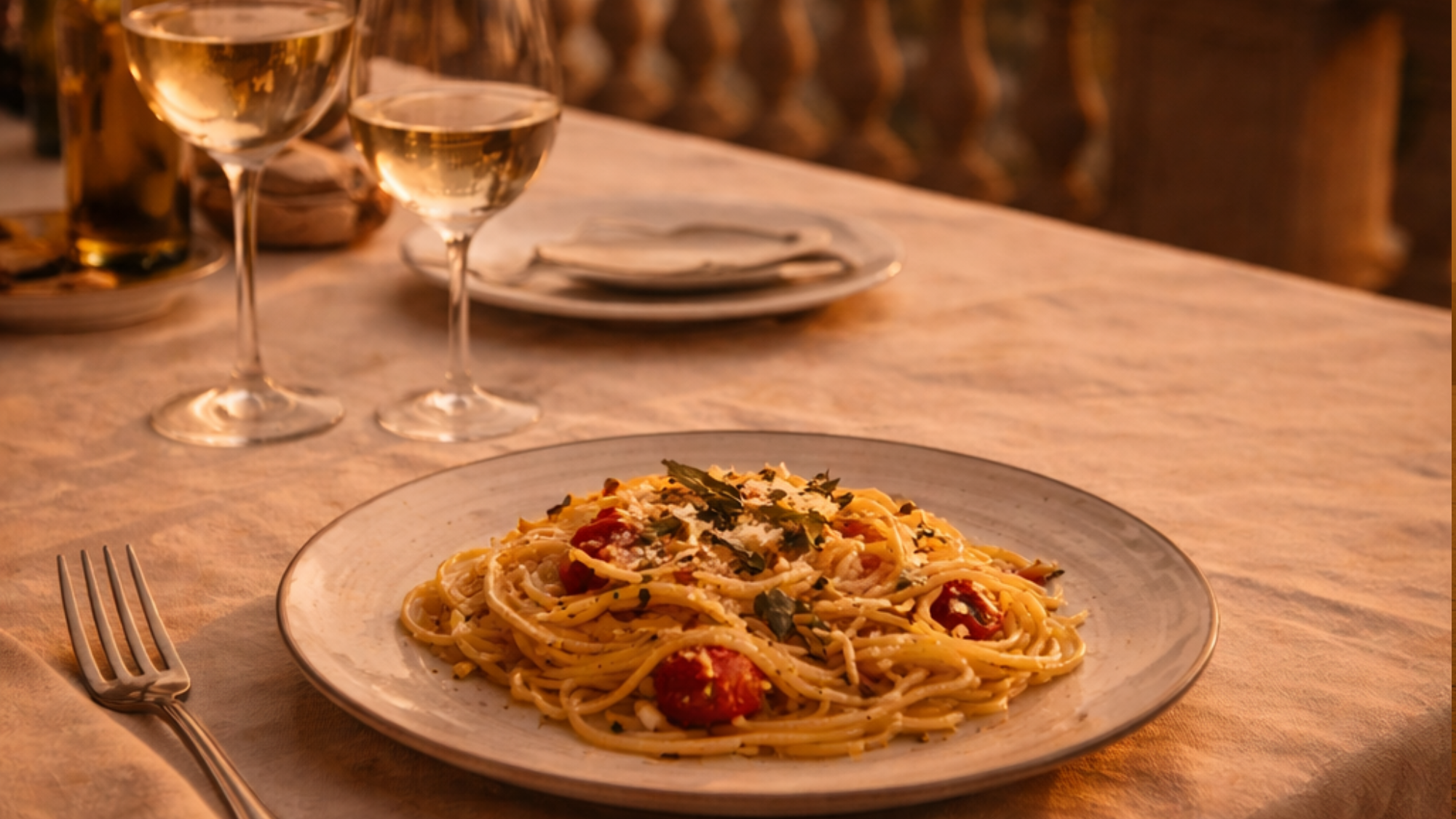
The restaurant is everything you hoped it would be.
Candlelight. Stone walls. A menu written in ink on heavy paper. Outside, the city moves in that unhurried evening rhythm that reminds you why you travel at all.
And somewhere beneath the pleasure of it, the calculation has already begun.
Is the pasta made fresh in-house — and if so, where? Did you ask clearly enough when you called ahead? The server seemed confident, but confident doesn't always mean informed.
This is the part of travel with celiac disease that rarely gets named. Not the logistics, though those matter. The invisible, ongoing mental work of being somewhere beautiful while part of your attention never fully arrives.
At home, there are systems. Known restaurants. A trusted grocery store. A server at that neighborhood place who has quietly learned your order.
Abroad, those systems evaporate. The familiar disappears and something heavier takes its place — not fear exactly, but a heightened attentiveness that doesn't soften when you sit down to eat. Language shifts. Preparation norms shift. The margin between a careful kitchen and a careless one becomes harder to read.
The people across the table see you order. They don't see the assessment happening simultaneously: the kitchen flow visible through a pass-through window, the way flour moves through the air near the bread station, the pause before a server answers a question about the sauce.
That vigilance is not irrational. It is, in its own way, a form of care. But it is also tiring — and the tiredness compounds across a trip.
There is also something quieter underneath it. A kind of grief that doesn't get much space in conversation.
The ease of a spontaneous meal. Sharing plates without negotiation. Ordering without rehearsing the question in your head first. Wandering into a place because the window looked good and the smell was right.
Even in cities that understand gluten-free dining well, the awareness remains. You are participating — fully, genuinely — and still calculating. That dual experience can feel isolating, even when the people you're traveling with are patient and kind.
What we've found, through years of traveling together, is that structure is where the emotional weight begins to lift.
Not rigid planning. Not a laminated checklist. Just the quiet confidence that comes from having done the research before you arrived — finding two or three restaurants you trust, learning a single clear sentence in the local language, understanding which cuisines carry lower inherent risk.
When uncertainty decreases, something in the body softens. The calculation doesn't disappear, but it moves to the background. And when it moves to the background, the meal becomes something you can actually taste.
The goal was never to eliminate awareness. It was to reduce anxiety enough to be present — to sit at a table abroad and feel steady rather than scanning, to let the evening be what it was meant to be.
The Takeaway
Research restaurants before you arrive — a confident server is not the same as a prepared kitchen.
Learn one clear, specific phrase in the local language explaining celiac disease and cross-contamination.
Choose destinations and restaurants with established gluten-free awareness whenever possible.
Build some redundancy into your plans — a backup option removes the pressure from any single meal.
The goal is not to eliminate caution. It's to reduce anxiety enough that you can be fully present.