Street Food in Europe: What’s Actually Safe?
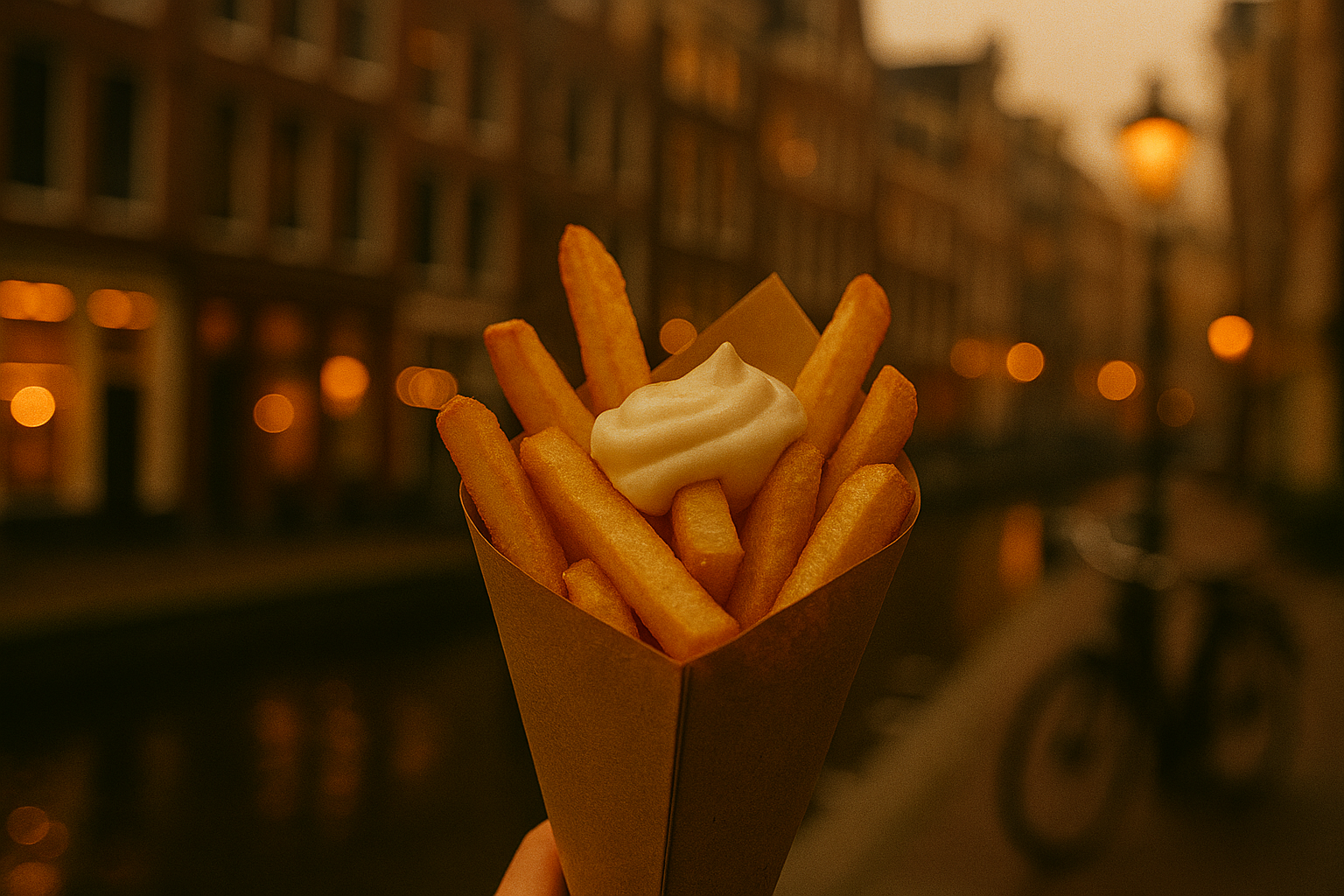
European street food has a particular pull. Paper cones of fries eaten leaning against a canal railing. Grilled seafood by the water at dusk. Market stalls lit up at golden hour, the smell of something good coming off a flat iron. It's one of the textures of travel that's hard to replicate anywhere else, and for gluten-free and celiac travelers, it can feel like the part of the experience that's just out of reach. It isn't off-limits — but it requires a different kind of discernment than a sit-down restaurant does, and understanding why makes the difference between a good decision and a regrettable one.
Why Street Food Carries More Risk
Most street food vendors operate in conditions that aren't built for allergen protocols: small prep spaces, high turnover, shared fryers, and a pace that doesn't naturally slow down for careful questions. That combination increases cross-contact risk even when the ingredients themselves appear gluten-free. This isn't a reason to avoid street food entirely. It's a reason to choose more deliberately, and to hold a higher standard of clarity before ordering than you might in a vetted restaurant.
The single most important thing to understand is the fryer. Shared fryer oil is not safe for celiac travelers, regardless of what's being cooked in it. Gluten is a protein and doesn't burn off at high temperatures — particles from breaded and battered items remain suspended in the oil and transfer to everything else cooked in it. Fries, calamari, croquettes, churros — if any of these are coming out of a fryer that also handles wheat-battered foods, cross-contact is effectively guaranteed. The question to ask is simple and direct: Is this fryer used only for gluten-free food? A vague answer, or no answer at all, is your cue to move on. Street food culture runs on speed, and certainty is what you need before you order.
What Tends to Be Safer
The most reliably navigable street foods are those with the fewest moving parts. Grilled meats — Spanish pinchoswithout bread, Greek souvlaki without pita, a simply prepared sausage where you've confirmed there are no wheat-based fillers — are strong options across most European countries. Fresh grilled seafood, sardines, octopus, and shrimp prepared on a flat surface rather than a fryer carry significantly less risk. Roasted chestnuts, fresh fruit, and olives require no preparation questions at all.
Buckwheat galettes in Brittany are worth mentioning specifically. Buckwheat is naturally gluten-free, and the tradition in that region is genuine — but confirm that the batter is prepared separately and that the cooking surface isn't shared with wheat-based crêpes. When the answer is clear, it's one of the more satisfying street food experiences available to a gluten-free traveler in Europe.
By Country
In Italy, street food awareness is higher than most — but a temporary market stall operates differently from an AIC-trained restaurant. Arancini and fried seafood are common and tempting, but fryer confirmation is still essential. Don't assume that national awareness transfers automatically to every outdoor vendor.
In Spain, tapas culture and street food overlap considerably. Jamón, cheese, and grilled seafood are reliable anchors. Fries and croquettes are everywhere and almost always require a fryer question — one that, at a busy outdoor stall, may be difficult to get a clear answer to.
In the Netherlands, fries are iconic and deeply embedded in the culture, but shared fryers are the norm rather than the exception. Unless a vendor explicitly confirms a dedicated fryer, they're safer to admire than to order.
In Greece, the abundance of grilled meats and fresh seafood works strongly in your favor. Pita and bread appear alongside almost everything, so being clear about not wanting them is important — but the underlying dishes are often naturally safe when prepared simply.
Market Halls vs. Outdoor Stalls
Indoor market halls tend to offer better conditions than standalone outdoor carts. Prep areas are typically larger, allergen labeling is more common, vendors are more established, and English fluency is generally higher. The conversation is easier to have, and the kitchen practices are more likely to reflect some degree of separation. That doesn't mean you skip the question — but the odds of a productive answer are better, and the overall environment carries less cross-contact risk than a temporary stall in a busy square.
When to Walk Away
Some situations make the calculation simple. If flour is visibly airborne in the prep area, if fryers are clearly shared and the vendor doesn't understand the question, if the kitchen looks chaotic or there's no shared language to have the conversation in — let it go. Street food is part of the texture of travel, but it isn't the whole of it. A ruined trip is not worth any single dish.
The harder version of this is the emotional one. Street food carries a particular kind of spontaneity, and it's easy to feel the gap between what everyone around you is eating and what you're navigating. But participation doesn't require eating the specific thing in front of you. A safely grilled dish, eaten in the same plaza, at the same golden hour, with the same unhurried pace — that's the experience. The batter is incidental.
When a stall meets your safety criteria, enjoy it fully. When it doesn't, a nearby restaurant will serve you better in every sense. Confidence in that decision, made clearly and without apology, is what allows the rest of the trip to stay open.
The Takeaway
Street food vendors typically lack the separation space and allergen protocols of established restaurants — the risk level is higher by default, not by ingredient.
Shared fryer oil is not safe for celiac travelers regardless of what's being cooked in it; gluten proteins don't burn off at high temperatures and transfer to everything else in the oil.
Always ask directly: Is this fryer used only for gluten-free food? A vague or rushed answer means move on.
The safest street food options are the simplest: grilled meats without bread, fresh grilled seafood, roasted chestnuts, olives, and fresh fruit require the fewest preparation questions.
Buckwheat galettes in Brittany are a genuine gluten-free option — confirm batter separation and a dedicated cooking surface before ordering.
Italy's strong celiac awareness doesn't automatically extend to temporary market stalls; confirm fryers regardless of location.
Dutch fries are iconic but almost always cooked in shared fryers — skip them unless a dedicated fryer is explicitly confirmed.
Indoor market halls are generally safer than outdoor stalls: larger prep areas, more established vendors, better allergen labeling, and easier conversations.
When flour is airborne, fryers are visibly shared, or the conversation can't be had clearly — walk away. No dish is worth a compromised trip.
Participation in street food culture doesn't require eating the highest-risk items; a grilled dish eaten in the same square at the same hour is the same experience.