Italian Breakfast for Celiacs: What’s Actually Safe?
Here's the rewrite shaped to Wanderwell's narrative style — opening inside a lived moment, weaving guidance through story rather than lists, and landing on a grounded takeaway.
Italian Breakfast for Celiacs: What's Actually Safe
The bar fills quickly in the morning.
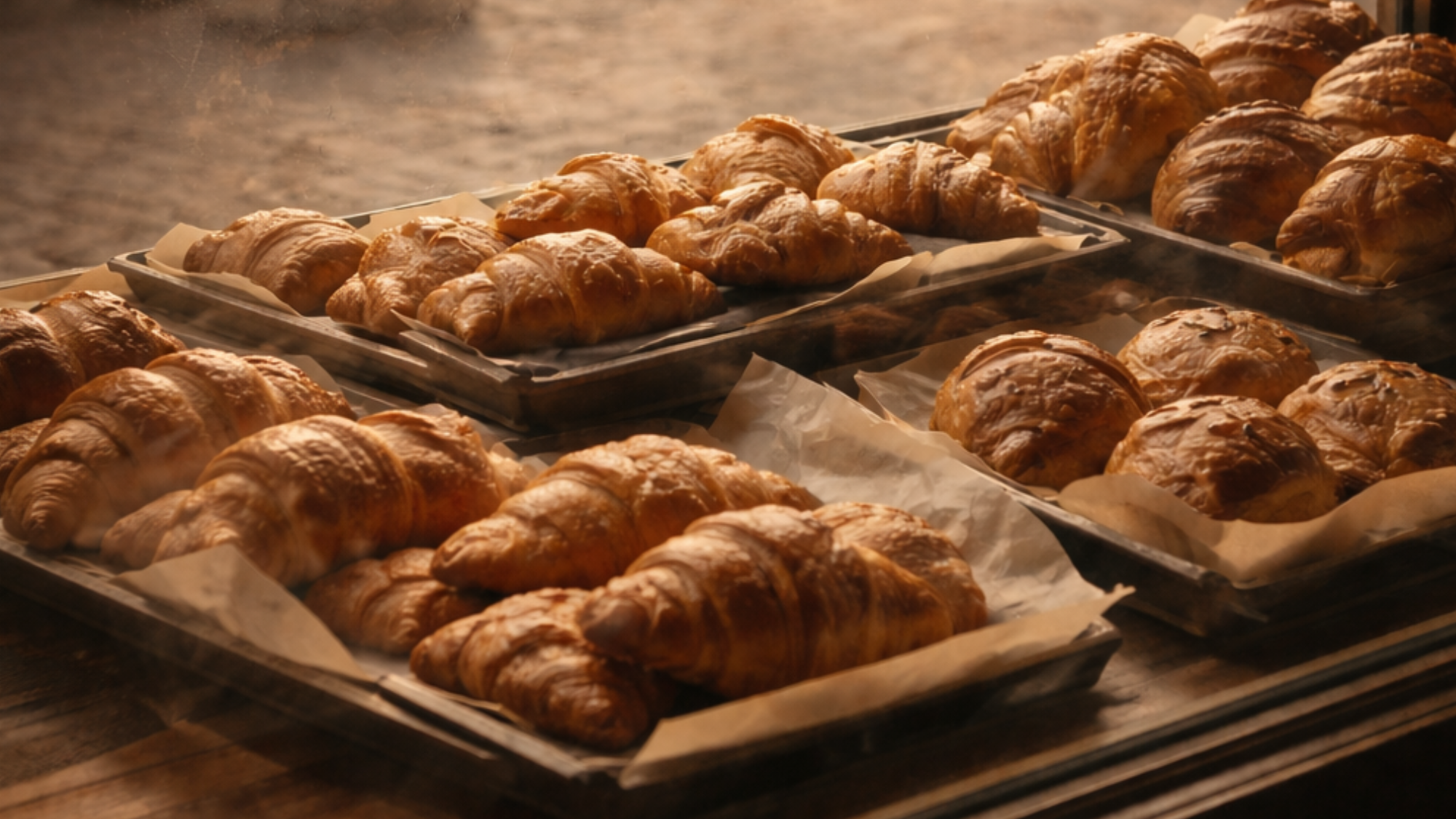
By eight o'clock, the espresso machine hasn't stopped. A man in a jacket reads the paper standing up, cornetto in hand. A woman orders without looking at the menu — she already knows what she wants. In Italy, breakfast is not a meal you linger over. It's a ritual, brief and familiar, repeated the same way every day.
For a celiac traveler watching from just outside that rhythm, it can feel like something just out of reach.
Italy is, by most measures, the most celiac-aware country in the world. The national celiac association — Associazione Italiana Celiachia — has spent decades training restaurants, bakeries, and institutions to handle gluten-free dining with genuine rigor. The infrastructure is real. But breakfast culture is fast, compact, and pastry-forward. The cafés are small. The counters are often shared. And the cornetti that define a traditional Italian morning are, of course, made from wheat.
The question isn't whether Italy is safe. It is. The question is knowing where to stand.
The most reliable place to start a morning in any major Italian city is a dedicated gluten-free bakery. They exist in Rome, Florence, Milan, Bologna — most cities with meaningful foot traffic have at least one. AIC-affiliated establishments carry gluten-free cornetti, pastries, and sometimes savory options, all prepared in environments where cross-contamination has been structurally eliminated. You can order freely. You can point at the case without running a silent checklist in your head.
If your hotel is within reasonable distance of one, it's worth orienting your mornings around it. That single anchor changes the texture of the whole day.
When a dedicated bakery isn't accessible, standard Italian cafés are often workable — but they require a specific question. Avete cornetti senza glutine? — "Do you have gluten-free croissants?" — will tell you immediately whether the café carries them, and what form they take. A sealed, individually packaged pastry stored away from the wheat display is meaningfully different from an unwrapped option sitting beside it. Italian cafés generally handle this better than most countries, but the confirmation still matters. Flour on the counter, shared tongs, open displays — these are the details worth noticing.
Coffee, for its part, asks nothing of you. Espresso, cappuccino, macchiato — all naturally gluten-free, all served with the quiet efficiency that makes Italian café culture so satisfying. That part of the morning is entirely yours.
Hotel breakfast buffets are a different calculation. Self-serve environments concentrate risk in ways that individual café orders don't — shared serving utensils, open trays, pastries unlabeled and side by side. Even in Italy, even at a well-managed hotel, the buffet requires a conversation with staff before you approach it. Ask whether there's a separate gluten-free section. Ask if sealed items can be brought from the kitchen. Never assume that proximity to a labeled item makes the unlabeled one safe.
For longer stays, or for travelers who prefer to begin the day without any negotiation at all, Italian supermarkets offer a genuinely good alternative. Allergen labeling in Italy is clear, the crossed grain symbol is consistently applied, and dedicated gluten-free sections are common. Packaged brioche, yogurt, fresh fruit, gluten-free crackers — assembled the evening before, ready in the morning. An apartment rental makes this strategy almost effortless.
Breakfast sets the register for the rest of the day. A morning that begins with quiet confidence — a safe cornetto, an unhurried espresso, the city still cool outside — carries forward. A morning that begins with anxiety, with uncertainty, with the low hum of wondering whether you asked clearly enough, tends to carry forward too.
The Italian breakfast, properly navigated, can be one of the simplest meals of a celiac traveler's day. The country's infrastructure is genuinely on your side. What it requires is a plan made before you're standing at the bar — a known bakery, a practiced phrase, a clear sense of what confirms safety and what only looks like it.
Then the espresso tastes the way it's supposed to. And Rome opens up around you.
The Takeaway
Seek out dedicated gluten-free bakeries in major Italian cities — AIC-affiliated establishments eliminate cross-contamination risk entirely and allow you to order freely.
In standard cafés, ask for sealed, pre-packaged gluten-free pastries and confirm they're stored separately from wheat items.
Coffee is naturally gluten-free and low risk — order confidently.
Approach hotel breakfast buffets with caution; ask staff about separate gluten-free sections or sealed items from the kitchen before serving yourself.
Italian supermarkets have strong allergen labeling — stocking packaged gluten-free options for apartment stays or early mornings is a reliable backup strategy.
A safe, grounded breakfast sets the tone for the day. Build the plan before you arrive, and let the morning be simple.