What Is a Bruine Kroeg — And Can You Eat There Safely?
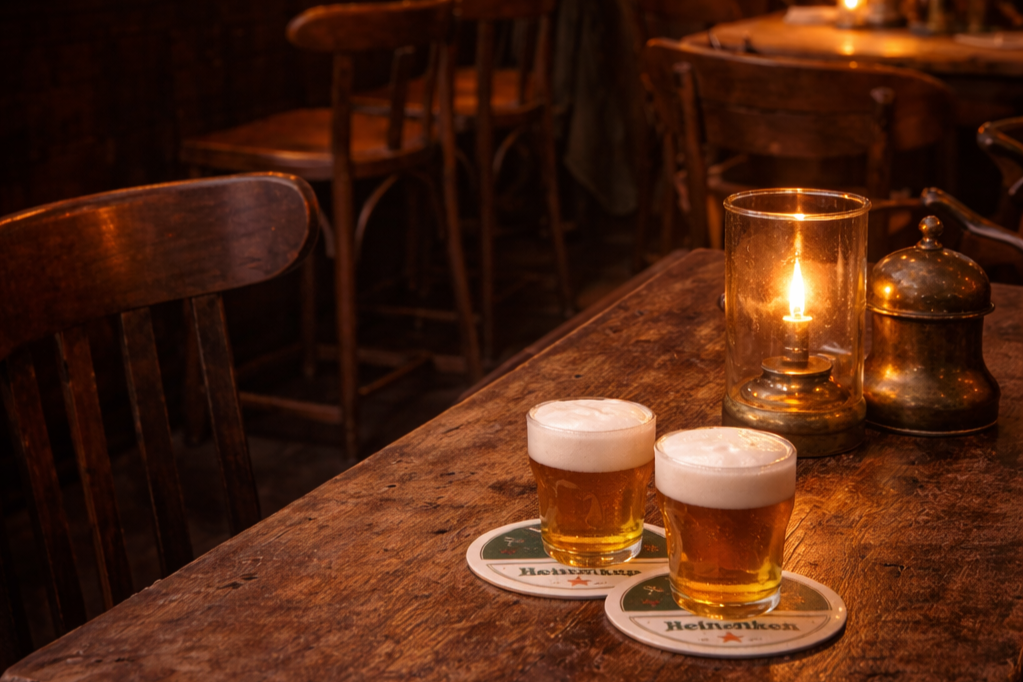
There is a particular kind of afternoon light in Amsterdam that seems to exist only inside certain cafés.
It comes through small windows, filtered and amber, and lands on dark wood that has absorbed decades of conversation. The walls are the color of old paper. Candles on the tables, even at three in the afternoon. A glass of jenever set down without ceremony. Someone in the corner reading without any apparent intention of leaving.
This is the bruine kroeg — the brown café — and it is as close as the Netherlands gets to a national living room.
The name is literal. Bruin means brown, and the color comes honestly: years of tobacco smoke, dark wood paneling, time itself settling into the surfaces. These are old places, unhurried places, built for the kind of afternoon that doesn't have an agenda. For a traveler trying to understand Amsterdam beyond its most photographed corners, the bruine kroeg is essential — not as an attraction, but as an atmosphere.
For a celiac traveler, it requires a specific kind of attention. And the first thing worth knowing is that the attention is worth it.
The food at a bruine kroeg is straightforward and unapologetic.
Bitterballen — small, breadcrumb-coated balls of braised meat — arrive at nearly every table, standard as a handshake. Broodjes, open-faced sandwiches built on dense Dutch bread, are the reliable lunch option. Kaas, Dutch cheese, appears on boards alongside mustard. The menu is short, the portions are modest, and nothing arrives with much ceremony.
It is also, almost entirely, built around gluten.
Bitterballen are breaded and fried — typically in a fryer that has held nothing but breaded items all day. Broodjes are, at their foundation, bread. Even the simplest bar snacks tend to involve either wheat flour or shared equipment. The bruine kroeg was not designed with dietary complexity in mind, and the kitchen — if there is a kitchen in the formal sense — is usually compact enough that separation is difficult even when the intention is there.
This is the part where a less honest travel guide would tell you about a workaround. There isn't one, not really. The bitterballen are what they are. No amount of charming the bartender changes the fryer situation.
What you can do is arrive knowing this, which changes everything.
The honest answer to whether you can eat safely at a bruine kroeg is: sometimes, with the right questions, and with realistic expectations about what the menu can offer.
Dutch directness works in your favor here. These are not environments built for elaborate requests, but they are also not environments where a clear question will be received with confusion or irritation. Ik ben coeliakie — heeft u iets zonder gluten? — "I have celiac disease, do you have anything without gluten?" — will be understood, and answered honestly. The Dutch tend not to tell you what you want to hear if it isn't accurate. In a country where directness is practically a civic virtue, that turns out to be enormously useful when you're trying to eat safely.
What you are likely to find is that the options are limited but legible. A plate of Dutch cheese. A charcuterie board, confirmed without crackers. The drink menu — jenever, Dutch gin, cider — is where the atmosphere lives anyway, and distilled spirits are naturally gluten-free. Belgian-style ales and wheat beers are not, but a server who understands your question will help you navigate.
What you will not find, in most cases, is a bruine kroeg with gluten-free bitterballen or a dedicated fryer. That infrastructure doesn't belong to this type of establishment. Expecting it leads to frustration. Knowing it in advance leads to a different kind of visit entirely — one that is genuinely worth having.
The bruine kroeg is best approached as an atmospheric stop rather than a meal destination.
Come for the jenever, the candlelight, the specific quality of an afternoon that has nowhere to be. Order the cheese board, confirm it arrives without bread, and let the place do what it does best. Anchor your meals somewhere with clearer allergen protocols — one of Amsterdam's dedicated gluten-free establishments, a restaurant with explicit celiac awareness — and let the bruine kroeg be what it was always designed to be: a place to slow down, not a place to eat substantially.
We have spent enough afternoons in enough brown cafés to know that this reframe changes the experience considerably. The celiac traveler who arrives expecting dinner will find it frustrating. The one who arrives expecting atmosphere, a drink, and a simple plate of aged Gouda will find something genuinely worth the detour.
Amsterdam has excellent dedicated gluten-free options — bakeries, restaurants, cafés that have built their entire operation around celiac safety. Those are where you eat well. The bruine kroeg is where you absorb the city.
Both matter. They just ask different things of you. And the traveler who understands that distinction gets to have both — the safe meal and the candlelit afternoon, the research and the ease, the preparation and the presence.
That is, more or less, what we came here for.
The Takeaway
A bruine kroeg is a traditional Dutch brown café — dark, atmospheric, unhurried — and an essential part of understanding Amsterdam beyond its tourist surface.
The food menu is largely built around gluten: bitterballen are breaded and fried, broodjes are bread-based, and kitchen separation is rarely available in compact bar environments.
Approach a bruine kroeg as an atmospheric stop rather than a meal destination — come for the jenever, the candlelight, and a simple cheese board confirmed without bread.
Dutch directness is an asset: ask clearly whether anything is available without gluten, and expect an honest answer rather than reassurance.
Most distilled spirits are naturally gluten-free; avoid wheat beers and Belgian-style ales, and ask your server if uncertain about a specific drink.
Anchor your meals at dedicated gluten-free establishments in Amsterdam, and let the bruine kroeg offer what it does best — atmosphere, not cuisine.