Street Food in Amsterdam
Saturday morning is the best time to arrive at the Albert Cuyp Market, and mid-morning is the quietest hour — before the tourist traffic has fully settled in, when the vendors are focused and the regulars still outnumber everyone else. It runs for almost a kilometer through De Pijp, and it moves the way the neighborhood does — without urgency, without spectacle, with a practical confidence that comes from being a working market for over a century rather than a curated food experience designed to feel like one. Cheese is cut to order. Fish is cleaned and stacked. Vendors with one thing they're known for have no particular interest in selling you anything else.
My partner and I have learned to walk the full length before stopping anywhere. This is, I'll admit, harder than it sounds. There's a particular cruelty to a market when you're navigating gluten-free — the smells arrive before the context does. Something is being pressed or fried or handed across a counter, and it looks exactly right, and then you get closer and understand why it isn't. The discipline of a single pass before any decisions are made has saved us from a number of enthusiastic mistakes.
Amsterdam's street food is built on tradition, and tradition, in this city, is built almost entirely on gluten. Stroopwafels are pressed warm from wheat dough at nearly every market stall. Bitterballen — those golden rounds of deep-fried Dutch bar culture that appear at every social occasion from business meetings to birthday parties — are breaded, fried quickly, and handled in environments where shared fryers are assumed rather than exceptional. FEBO, the beloved automat where you drop a coin and pull a hot croquette through a small glass door, is one of Amsterdam's genuinely singular experiences. It is not a dining option. It is, however, worth standing in front of for a moment, watching locals operate it with the practiced efficiency of people who have been doing this since adolescence. This is what I mean when I say the best approach to Dutch street food is to encounter it rather than to solve it.
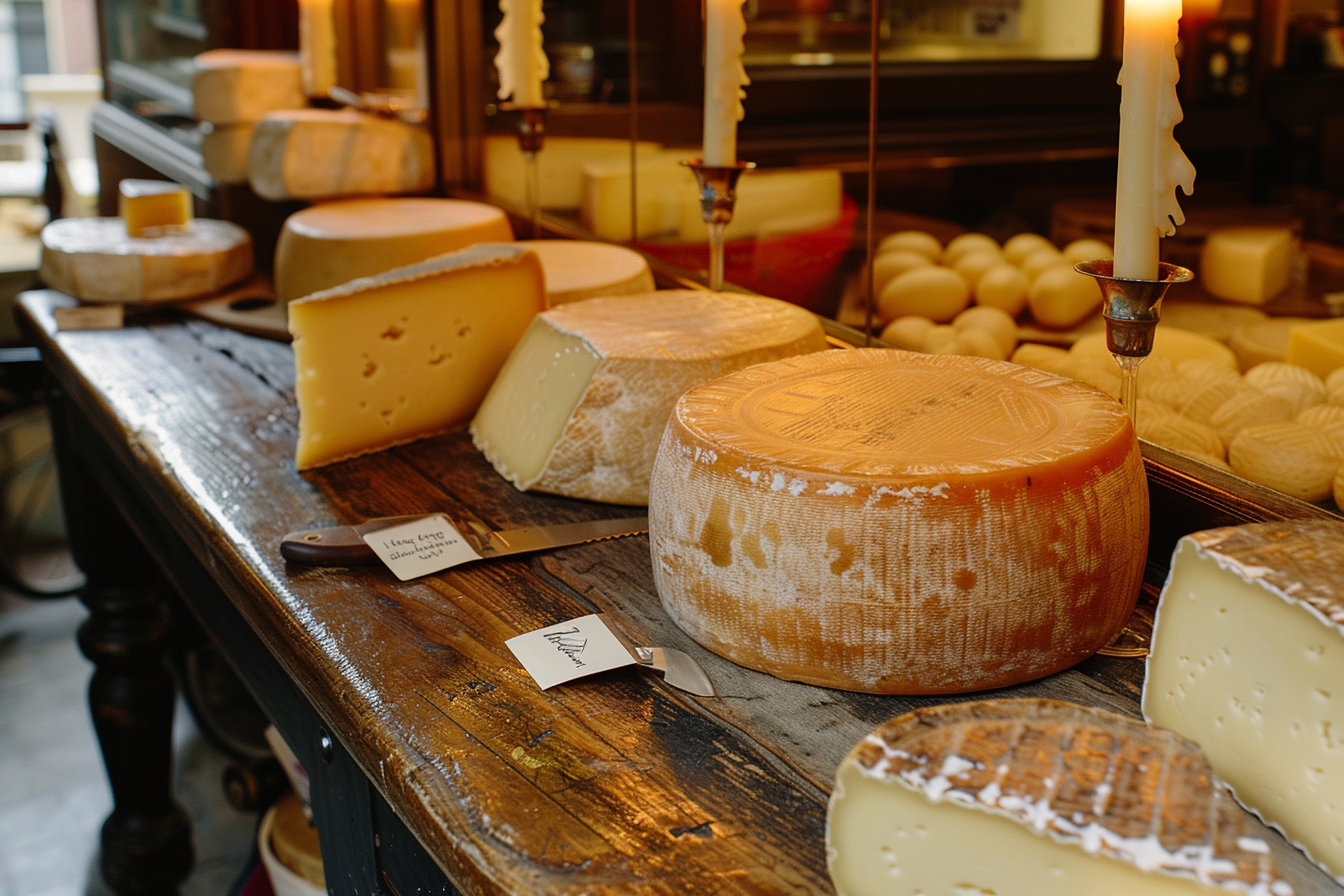
What makes a specific moment navigable isn't always the food itself — it's the setup. A vendor focused on one product, prepared the same way in a contained and consistent workspace, operates differently than a busy stall turning out six items simultaneously. That distinction tells you more than the menu does. At Albert Cuyp, what works is often what's simplest: aged Gouda cut from a wheel, handed over with a clean knife. Fresh fruit. Roasted nuts. A cheese vendor who has been at the same spot for twenty years and hasn't introduced anything new to the operation in the last ten. These aren't exciting finds — they're just things that are actually what they appear to be.
On Saturdays, there's a second market worth knowing about — and for gluten-free travelers, it may be the more rewarding of the two. Noordermarkt sits in a quiet square in the Jordaan, tucked against the Noorderkerk, and it runs at an entirely different pace than Albert Cuyp. Farmers come in from the surrounding countryside. The vendors know their products with the specificity of people who grew or made them. Cheese stalls are abundant, and the conversations are unhurried enough that allergen questions get actual answers rather than polite deflections. Remeker cheese — an organic raw Jersey milk cheese aged six, nine, or thirteen months, made by a single farm family — is worth seeking out specifically. It is, by most accounts, one of the finest hard cheeses in the Netherlands, and naturally gluten-free. Some stalls carry artisan GF bread, too, if you ask. A Saturday morning at Noordermarkt is one of the more quietly satisfying things Amsterdam offers.
Fries are a more complicated case. Patat appears everywhere — at windows, at stands, at markets — and in a vacuum, there's nothing concerning about a fried potato. The question is always the fryer: what else goes into it, and how often, and in what order. At dedicated frietkoten with a limited menu and high turnover on a single product, you can often get a direct answer. At a busy market stall operating seven items at once, the answer is harder to come by, and the confidence you'd need to proceed probably isn't available. Heertje Friet on the Herengracht uses a dedicated fryer for fries, with a reference sheet for sauces and staff who change gloves when you mention celiac. Vleminckx on Voetboogstraat sells fries only and fries nothing else — which means the shared-fryer question doesn't arise at all. Either is where to go when the cone of frites becomes something you actually want to eat rather than just admire.
One small thing worth knowing before you order: frietsaus, the lighter Dutch condiment often offered alongside fries in place of mayonnaise, can contain wheat-based thickeners. It's the sauce trap that doesn't announce itself. Ask about the condiments with the same attention you'd bring to the fryer.
Herring is where street food in Amsterdam finally becomes straightforward — and it happens almost by accident. Stubbe's, on the Singel a few steps from Centraal Station, has operated since 1903 with a simplicity that has no need to update itself. One product. One preparation. The fish comes raw and lightly cured with onion and pickles — order haring in stukjes, zonder broodje, and it arrives in a paper cup, eaten with a toothpick, in about ninety seconds. Dutch Hollandse Nieuwe is cured only in salt; the ingredients are herring, salt, and nothing else. This is as close as street food gets to certainty. The Albert Cuyp Market has several excellent alternatives — Van Rheenen en Zoon and Vishandel Albert Cuyp at stall 155 are both well-regarded — and Frens Haringhandel near the flower market is reliable for those in the southern canal belt. The practical notes: visit early when surfaces are cleanest, ask for freshly cut fish, and avoid stalls that primarily do fried fish alongside herring. The cross-contamination risk here is low — but the setup still matters.
The stroopwafel is harder to let go of, and I want to be honest about that. It is being made fresh, right in front of you — pressed between hot irons, filled, warm, smelling the way nothing in an airport package has ever managed to replicate. The impulse to participate is entirely reasonable. The market stall version is wheat-based, pressed on a shared surface, in a rhythm of production that doesn't leave space for careful handling. That much is true.
But the stroopwafel problem has a solution, and the solution is in De Pijp. Craft Coffee & Pastry on Gerard Doustraat is a fully dedicated gluten-free bakery — everything made there is GF, with no shared equipment and no cross-contamination risk. Their stroopwafels are the real thing: crispy, properly filled, warm when they're fresh. They also make croissants, boterkoek, and bread. The operation runs Wednesday through Saturday only, from ten in the morning until four — and items sell out, which means arriving early is not optional advice. If you're planning a Saturday at Albert Cuyp, De Pijp is where you already are. The two stops make a natural morning.
For days when Craft isn't open, Albert Heijn stocks their own-brand GF stroopwafels, consistently rated among the best by celiac reviewers. It is not the same experience as a market stall. It is, however, an actual stroopwafel — eaten with a cup of coffee at the hotel, or packed for a long afternoon at the Rijksmuseum. The market stall version becomes scenery. The stroopwafel itself remains available.
We don't build our days in Amsterdam around street food. We encounter it while doing other things. Some encounters end well — cheese from a Noordermarkt vendor, herring near the water, fries from a stand where the fryer question had a clear answer, a proper stroopwafel on a Wednesday afternoon in De Pijp. Others are just a pleasant smell and a decision not to stop. Neither outcome determines whether we eat well or feel well or enjoy the city. That's been accounted for elsewhere, before we left the hotel, before we arrived. The street food fills the edges of the day, and occasionally, on a Saturday morning in De Pijp or under the Noorderkerk, it fills them rather well.
The Takeaway
Amsterdam's street food tradition is largely wheat-based — arriving with that expectation means you're making decisions, not discovering disappointments
Walk the full length of a market before stopping; one pass changes how you see what's actually available
Albert Cuyp and Noordermarkt offer two distinct market experiences — Albert Cuyp for energy and variety, Noordermarkt on Saturday mornings for a slower, more artisanal encounter with aged cheese, fresh produce, and vendors who know their products intimately
At any market, whole foods handled simply — aged cheese, fresh fruit, roasted nuts — are the most reliably navigable options
For fries, the fryer is the real question; Heertje Friet and Vleminckx are where the answer is always clear — and ask about frietsaus separately, as it can contain wheat-based thickeners
Herring at a focused stand is one of the few street foods in Amsterdam where the setup is as simple as the ingredient list; Stubbe's near Centraal Station has operated this way since 1903
The market stall stroopwafel requires accepting it belongs to someone else's trip — but Craft Coffee & Pastry in De Pijp (open Wednesday–Saturday) makes a fully dedicated GF version worth planning the morning around
When meals are planned and the day is anchored elsewhere, street food becomes something you encounter rather than something you rely on — and that distinction changes everything