What Cross-Contact Really Means (And Why Restaurants Get It Wrong)
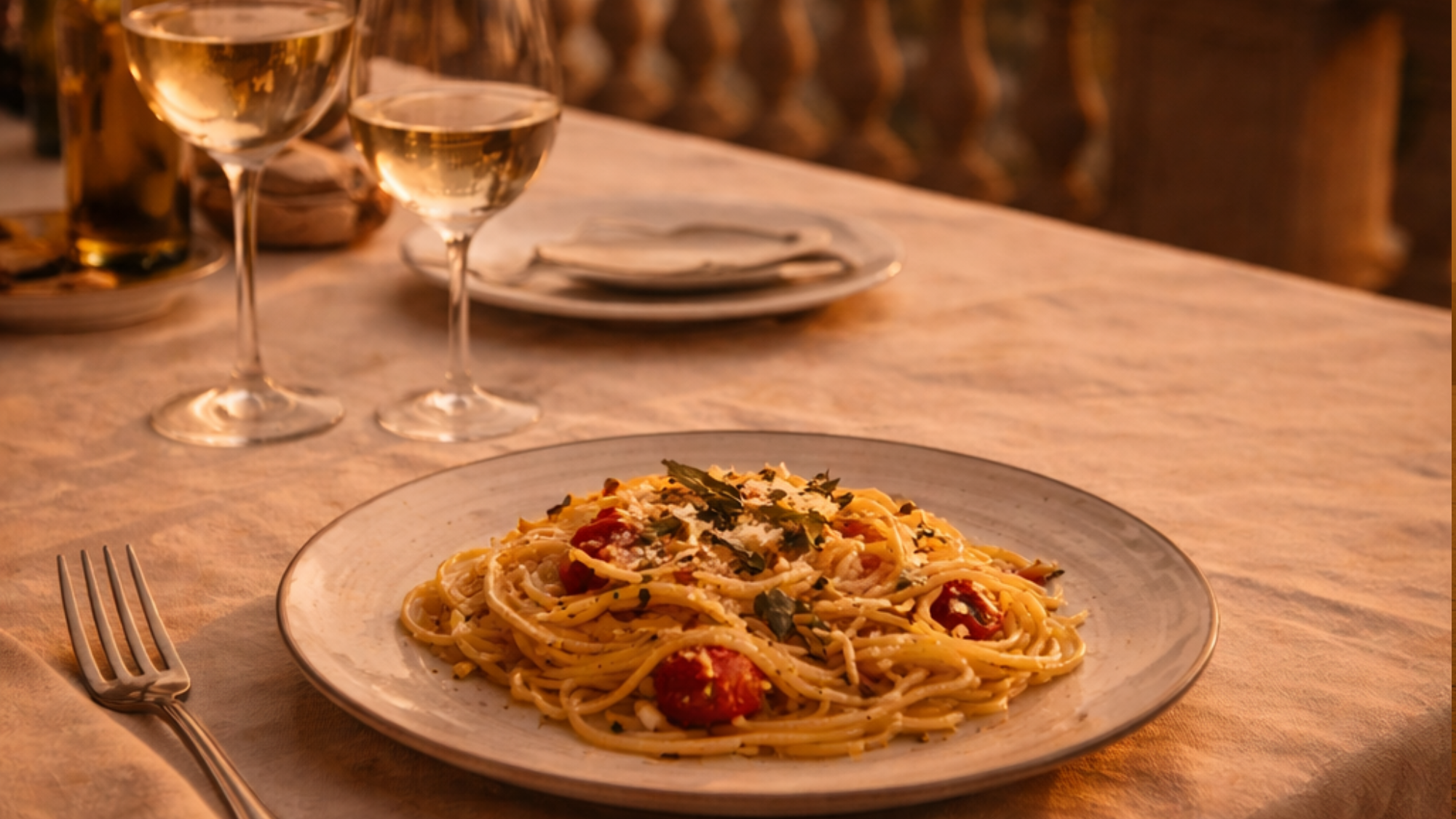
The salad arrives without croutons.
The server mentions it before setting down the plate — we took those off for you — and there's genuine goodwill in the gesture. The kitchen heard the request. Someone made an effort.
And yet, if those croutons were tossed into the bowl before they were removed, the greens have already been touched by gluten. The surface contact happened. The accommodation, offered with care, didn't actually solve the problem it was meant to solve.
This is the gap that sits at the center of most celiac travel experiences. Not malice. Not indifference. A misunderstanding of where the real risk lives.
Cross-contact is not about ingredients. It's about environment.
A dish can contain no gluten whatsoever and still be unsafe if it was prepared on a flour-dusted surface, strained through equipment used moments earlier for wheat pasta, or placed on a grill still holding crumbs from a bun. Gluten is a protein — it binds, it adheres, it transfers through proximity in amounts invisible to the eye. For someone with celiac disease, those invisible amounts are enough. The autoimmune response doesn't distinguish between a large exposure and a trace one. The intestinal damage accumulates regardless of whether symptoms are immediate or mild.
Most restaurant kitchens understand gluten-free as an ingredient category. Fewer understand it as a systems question.
The fryer is where this misunderstanding surfaces most reliably.
A common assumption, repeated across kitchens in every country: the oil is hot enough to neutralize the risk. It isn't. Gluten proteins do not break down at fryer temperatures. What happens instead is that particles of batter and coating detach from the items being fried, circulate through the oil, and adhere to everything that follows. A fryer that has held breaded chicken, fish in batter, or any wheat-coated item is a fryer that carries cross-contact risk for every subsequent order. The only reliable solution is a dedicated fryer — one that has never held gluten-containing food. When a restaurant can't confirm this, the answer about fries is already there.
The same logic applies to pasta water, shared cutting boards, knives moved between tasks, serving utensils that pass through multiple dishes. Cross-contact is cumulative and invisible. Removing visible gluten — lifting a crouton from a salad, scraping a sauce from a plate, pulling a bun off a burger — does not reverse contact that has already occurred. The gluten that was there doesn't leave with the item.
Restaurant kitchens get this wrong not because they don't care, but because the training often stops at ingredients. High staff turnover means protocols don't always travel with the team. Fast-paced service creates pressure that works against the careful separation cross-contact prevention requires. And celiac disease is frequently miscategorized alongside lifestyle-driven gluten avoidance — a conflation that leads kitchens to treat the request as a preference to accommodate rather than a medical condition to protect against.
The language you hear in response to a cross-contact question is often the clearest signal available. We try our best and it should be fine and we've never had a complaint are expressions of goodwill. They are not descriptions of a system. What a kitchen with genuine cross-contact protocols sounds like is more specific: a separate pan, a change of gloves, a dedicated prep area, a fryer used only for gluten-free items. The difference between reassurance and precision is audible, and it matters.
Well-run kitchens make their structure visible in other ways too. Allergen menus that distinguish between gluten-free ingredients and gluten-free preparation. Staff who ask clarifying questions rather than simply confirming the request. Color-coded utensils. Dedicated storage. These aren't signs of an unusual kitchen — they're signs of one that has thought carefully about the gap between what a dish contains and what a diner is actually exposed to.
The anxiety that celiac travelers carry into restaurants is not excessive. It is calibrated to a real and invisible risk that most people at the table don't have to think about. The goal is not to interrogate every kitchen — it's to identify, before sitting down, whether a kitchen understands what you're actually asking.
When it does, something shifts. The question gets answered with specifics. The meal becomes uncomplicated. The table, the conversation, the food itself — all of it opens up.
That's what the question is for.
The Takeaway
Cross-contact is about environment and systems, not just ingredients — a dish can be gluten-free in composition and still carry risk from shared surfaces, utensils, or equipment.
Removing visible gluten does not undo contact that has already occurred; croutons tossed and removed, buns lifted from burgers, and scraped sauces all leave traces behind.
Fryer oil does not neutralize gluten — shared fryers carry cross-contact risk for every item cooked in them, regardless of temperature.
Listen for precision in staff responses: specific descriptions of separate prep areas, dedicated equipment, and changed gloves indicate genuine protocol; reassurance without detail does not.
Celiac disease is an autoimmune condition, not a dietary preference — kitchens that conflate the two tend to underestimate the level of care cross-contact prevention actually requires.
A kitchen with real systems makes them visible; trust your read of both the confidence and the specifics in the answer.