Dedicated Fryer vs Shared Fryer
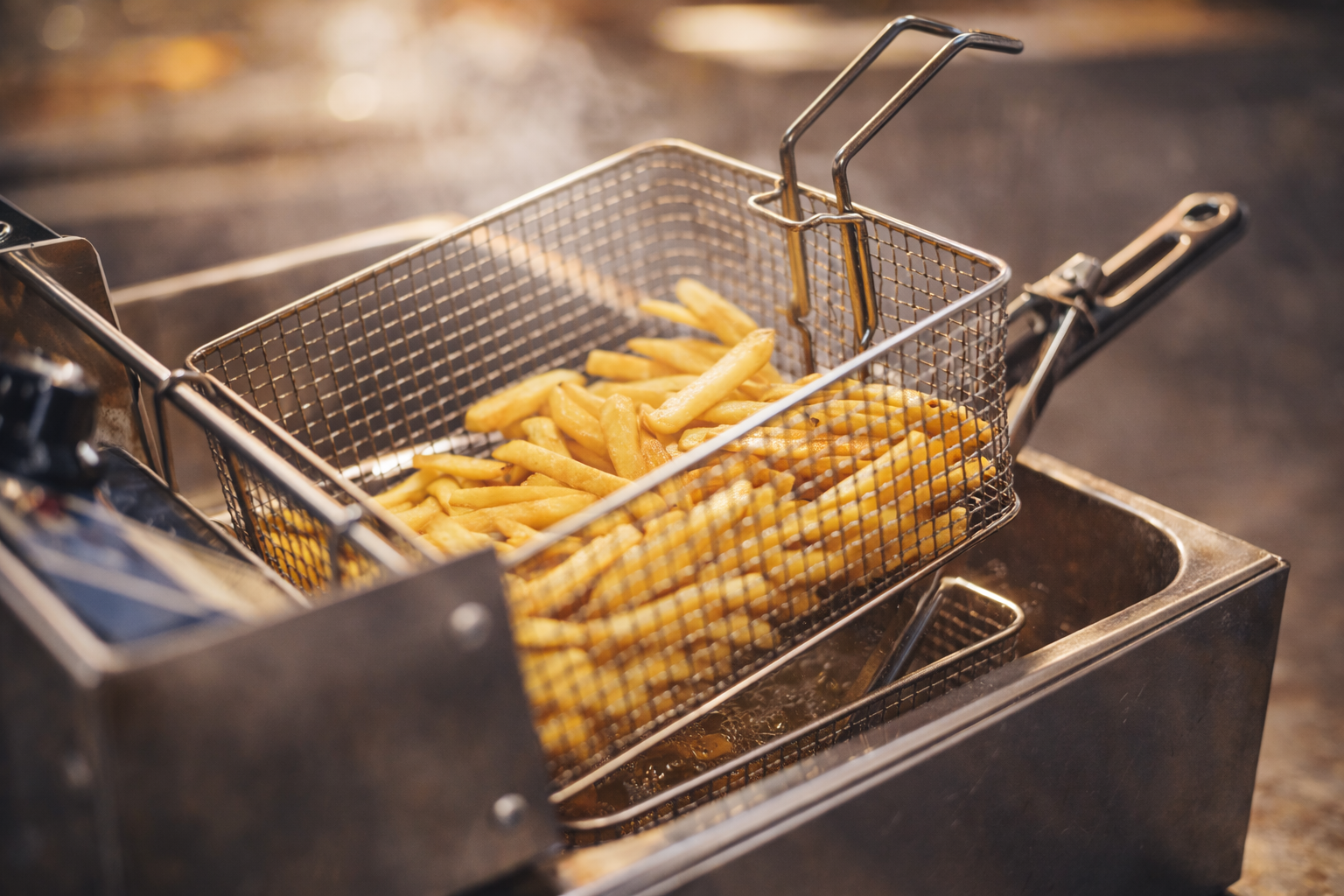
Fried food is rarely casual when you're traveling with celiac disease. It's calculated. Because the difference between a dedicated fryer and a shared fryer isn't a minor technical distinction — it's the difference between a meal that's safe and one that isn't, even when the ingredient itself contains no gluten. Understanding why that's true, and knowing exactly what to ask, is one of the most practical things you can do before sitting down in an unfamiliar kitchen.
Why the Fryer Matters
A dedicated fryer is used exclusively for gluten-free foods. No breaded wheat products enter the oil, no battered items share the basket, no cross-contact occurs through the cooking process. When French fries, calamari, or arancini are cooked in oil that has only ever touched gluten-free items, the risk from the fryer itself is effectively removed.
A shared fryer is the opposite. Chicken tenders, onion rings, mozzarella sticks, and French fries cooked in the same oil means that even an ingredient with no gluten in it is being submerged in oil that carries gluten particles from everything else that's passed through it. The fries didn't change. The oil did.
The reason this matters comes down to what gluten actually is. Gluten is a protein, and proteins don't burn off in hot oil. Tiny particles of batter and breading break away during frying and remain suspended in the oil. They adhere to whatever is cooked in it next. High temperature doesn't neutralize them. The logic of "it's just oil" simply doesn't apply — and in a shared fryer, that oil is the problem.
What to Ask
You don't need a lengthy explanation at the table. One direct question is enough: Is the fryer dedicated gluten-free? What you're listening for is specificity. A response like "yes, we have a separate fryer used only for gluten-free items" is a good answer. "We can fry it separately" requires a follow-up — separate oil, or just a separate basket in the same oil? Those are not equivalent. "It's the same oil but it burns off" is not a safe answer, regardless of how confidently it's delivered. Hesitation matters too. A server who pauses and guesses is giving you information just as much as one who answers clearly.
Where Dedicated Fryers Are More Common
In countries with stronger gluten-free infrastructure, fryer separation tends to be taken more seriously. In Italy, many restaurants trained through the Associazione Italiana Celiachia understand fryer protocols and designate gluten-free equipment explicitly — it's part of the training, not an afterthought. In the United States, it varies considerably; some kitchens are meticulous, others haven't thought carefully about it at all. In smaller European cafés, fryer separation is less common unless the restaurant specializes in gluten-free cooking. The standard isn't consistent across borders, which is exactly why asking is non-negotiable regardless of where you are.
Foods That Carry the Most Risk
Fryer contamination is the concern most often overlooked because the foods in question can seem straightforward. French fries contain no gluten. Neither does plain calamari, or a simple fried vegetable. But if any of those are prepared in a shared fryer alongside breaded or battered items, the gluten exposure comes from the oil rather than the ingredient. The same applies to arancini, fried chicken, churros, and doughnuts. If it goes into a fryer in a kitchen that also fries wheat-based foods, assume risk until you've confirmed otherwise.
The Practical Reality
Fried food is often the category people miss most when traveling with celiac. There's something genuinely expansive about finding a kitchen with a dedicated fryer — the menu opens up, the meal feels normal, the experience of sitting down and ordering without restriction is exactly what good travel should feel like. But that feeling is only worth having when the answer has been confirmed, not hoped for. If a fryer is shared, the better choice is grilled, roasted, or anything that removes the variable entirely. The goal of a meal isn't to eat everything on the menu. It's to eat confidently and be fully present for the experience around you.
One clear question asked calmly, followed by a careful answer, is the difference between a meal you can relax through and one you spend second-guessing. It's worth asking every time.
The Takeaway
A dedicated fryer is used exclusively for gluten-free items — no shared oil, no shared baskets, no cross-contact from breaded or battered foods.
A shared fryer is not safe for celiac travelers, even when the food being cooked contains no gluten ingredients — gluten particles from other items remain suspended in the oil.
Gluten is a protein and does not burn off at high temperatures; hot oil does not neutralize gluten contamination.
Ask one direct question: Is the fryer dedicated gluten-free? Listen for specific, confident answers — vague reassurances are not enough.
"We can fry it separately" requires a follow-up: separate basket in the same oil is not the same as separate oil entirely.
Dedicated fryers are more consistently found in AIC-trained restaurants in Italy; availability varies widely in the US and across smaller European kitchens.
Foods most commonly affected include French fries, calamari, arancini, fried vegetables, and anything else cooked alongside breaded or battered items.
When a fryer can't be confirmed as dedicated, choose grilled or roasted alternatives — confidence at the table is worth more than any single dish.